Showing posts with label TAAS. Show all posts

Tuesday, January 23, 2018

How long will the rich be willing to share the roads with the poor?


In Ray Bradbury novel "Fahrenheit 451" we are told of a world with no private cars (above, a still from the 1966 movie by François Truffaut). Bradbury had correctly understood that dictatorships not only tend to burn books but also don't like their citizens to own private cars. In this post, I argue that the growing social inequality in the West may soon lead to the demise of the private car for the middle class. This evolution may be helped by such concepts as TAAS (transportation as a service). 


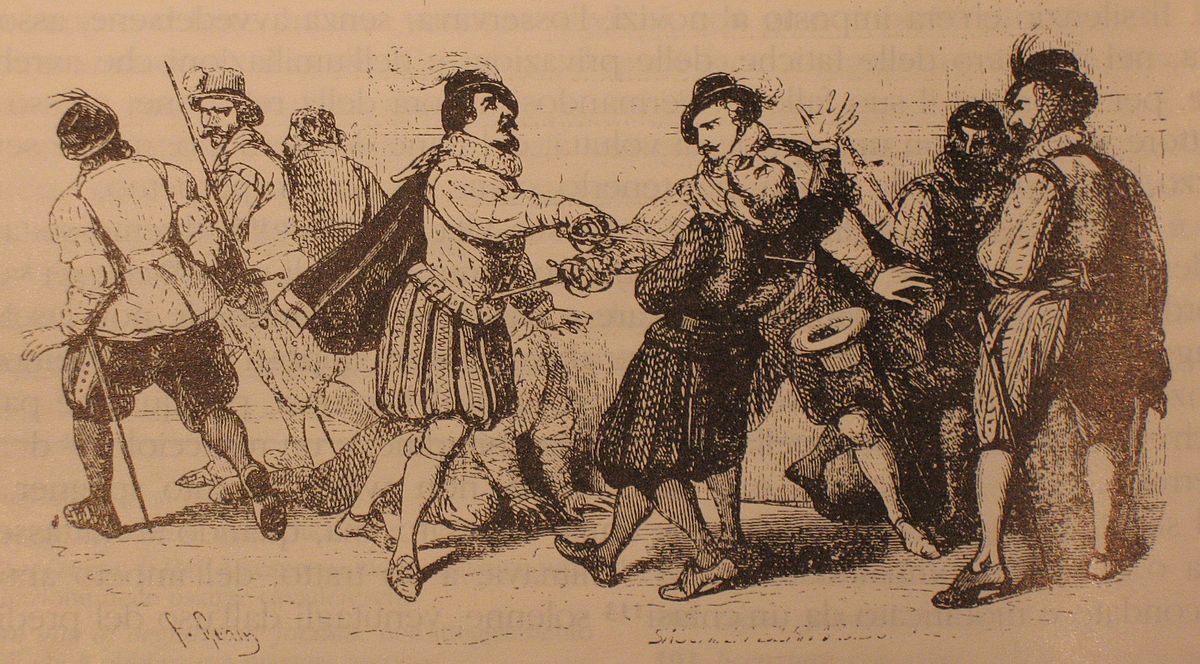
In his "The Betrothed", (1827) Alessandro Manzoni tells us of how a dispute on the right of the way led to a bloody duel between two noblemen. The story takes place during the 17th century and it seems that, at that time, whether one should cede the way to another was a question of rank.

In our (perhaps) enlightened times, this attitude looks absurd. When you see a stop sign at a crossroad, you are supposed to respect it, independently of whether you drive a rusty Toyota Corolla or a shiny Porsche Cayenne. But, if you think about that, the rich must be very unhappy about having to share the road with the poor and their clunkers. They might well be thinking of ways to have the street all for themselves, avoid traffic jams, and regain the mobility that cars provided when there weren't so many of them.

Is it possible? Well, think of this: the diffusion of private cars in the Western World, and in particular in the US, took place during a period when inequality was declining and reaching values which were possibly the lowest in modern history. But things have changed a lot since then. Here are some data for the Gini Index in the US (from the US Census Bureau)

The Gini index is a measure of the income distribution: it is between a minimum of 0 and a maximum of 1, but in practice, it is between 0.2 and 0.7. The larger the Gini index is, the higher is inequality. And you see how, during the past decades, inequality in the US has been increasing. Similar trends can be seen in other Western countries. 

So, the concept of "public roads" for everyone was developed in a historical period when the Gini index in the US was around 0.35. Today it is around 0.45. That's a very significant variation which is surely destined to have important social consequences. I was telling you before that in Italy during the 17th century, the right of way was determined by one's social status. So, what was the Gini index, then? We don't have values for Italy but, according to Ourworldindata, the Gini index in England was of the order of 0.5 in the 18th century, close to the current value of 0.45 for the US. Just like the nobles of that time, our modern nobles may well think that there is no reason for them to share the road with the commoners. So, what may happen?

For one thing, the concept of "public road" is being eroded in various ways. In the US it is done under the name of "gated communities" whereas in Europe you see entire sections of cities declared off-limits to cars by local governments, unless you are a resident. Another way to expel the poor from the street is to make cars or fuel very expensive, that can be done by means of taxes and that's traditionally done in Europe -- so far that has not prevented the poor from using cars, but it may in the near future. 

Increased costs may have already reduced traffic in some regions of the world. In Italy, the consumption of gasoline is down to nearly half of what it was ten years ago. But in the US, the situation is far less dramatic. Other regions of the world show intermediate trends. On the whole, private cars are not growing in numbers, but they are not disappearing, either. There are good reasons for this.


The problem is clear: there is no way that you can serve this kind of urban environment at a reasonable cost with conventional public transportation, buses or trains. And, of course, the people living there have no place where they can go on foot. So, they will try everything they can to stick to their cars. It is the only way they have to move around. 

A further, and somewhat perverse, characteristic of private cars is the fact that they have a considerable capital cost. So, once you made the effort of buying one, driving an extra mile (the "marginal mile") is not so expensive. Actually, the more miles you drive, the less each mile will cost and this is an incentive to drive more. 

So, it looks like a no-win situation for the rich, unless they really want to create a
zombie apocalypse in order to expel the poor from the roads. But there is another possibility: it is called "Transportation as a service" (TAAS). This is basically a hi-tech rental service. The idea is that you don't own a car anymore, but you rent it as you need. Theoretically, TAAS should be less expensive than the current scheme because you share the same car with other people. And middle-class suburbanites should be happy to use TAAS. 

But, as it often happens, technological changes bring about unexpected social changes. With TAAS, you don't have anymore the "marginal mile" effect, so that in order to save money you have only one strategy: cut the number of miles traveled. With the current trends of rising inequality and impoverishment, suburbanites will be forced to cut all the non-strictly needed trips. 

Not just that: the concept of TAAS allows differential tariffs leading to the possibility of a control of the traffic flow unthinkable today. Want to use TAAS during the rush hour? You are welcome, but you must pay more. Want to drive in a posh shopping area? Again, you are welcome, but you have to pay for the privilege -- or, maybe, sorry, but you don't belong to the right club. But, in exchange, we can offer you a special TAAS deal if you go shopping at the supermarket tonight at 3:00 am. 

In the end, TAAS may well sweep the poor out of the public roads even faster than the current trends are doing. Will we arrive at a point when priority at crossroads will be determined by the social status of drivers, as it was in the 17th century? We cannot say, but TAAS vehicles could be programmed to behave exactly in this way. All traffic lights will be green for those who can pay.

Of course, this is not a fault of the TAAS scheme in itself. Transportation as a service is a good idea that should bring us a more efficient transportation, less noise, and less pollution. The problem it is the result of the increasing inequality in society which, in turn, is related to the gradual disappearance of our energy slaves, fossil fuels. If we don't find a way to replace fossil fuels with something equivalent to power our society, we will return to the kind of world that Manzoni described to us. A world where you could be killed because someone thought he was nobler than you and wanted the right of way.  


Below: an illustration of Manzoni's novel "The Betrothed." It is the scene when two aristocrats quarrel over a question of priority and the result is a duel in which one of the two is killed. 


Monday, May 29, 2017

Why the American Way Of Life Is Negotiable: the Coming Transport Revolution.


Image: Volkswagen advertising in 1939 (source). Already at that time, Germany was planning to adopt the American model of "a car in every garage." But car ownership seems to be becoming more and more obsolete. Sooner or later, people will have to give away their cars, closing a peculiar and unusual cycle in the history of humankind (BTW, this is the most subversive post I ever published, I think)


In a previous post,  I discussed the RethinkX report by James Arbib and Tony Seba on the future of transportation. The report discusses a technological revolution that would bring about a new concept: "Transportation as a Service" (TaaS) that will see people move mainly by using publicly available, driverless cars. Many took the report (and my comments on it) as just another technofix aimed at keeping things as they are; business as usual. Indeed, the report framed the "TaaS" concept in terms of economic growth. Nothing else is acceptable in the public debate, today.

So, it seems that few people realized what kind of sacred cow Arbib and Seba are planning to slaughter and serve as well cooked burgers. It is nothing less than the private car, the pivotal element of the American way of life (yes, exactly what George Bush 1st said "is not negotiable"). This idea is as far from business as usual as I can imagine, one of the most disruptive and revolutionary ideas that I came across in recent times. So, I think I can go more in depth into this subject and explain why it is so disruptive and revolutionary.

Let start from the beginning: it all started in 1908 with the Ford T (figure from "The Daily Signal")


The growth in car ownership was the result of a political decision that most Western governments took at some moment (even Adolf Hitler took such a decision, at least in part). It didn't necessarily have to be taken: for instance, the Soviet Government always discouraged private car ownership. But governments, although not benevolent organizations, are made of people and people can recognize a good business when they see it. More cars meant more highways, more bridges, more shopping centers, more housing developments, and more opportunities to build things. That meant a lot of money flowing. So, the explosive development of private motorization happened because it could happen.

But, in recent times, the trend is reversing. The number of cars per person and per household is going down. These data by Sivak (2015) seem to be the most recent ones available


And it is not just the number of cars that's going down, also the number of miles driven per person or per car is falling. The trend is the same in many Western countries: we went through some kind of "peak car". 

So, what's going on? One factor is that cars are becoming more expensive (image from "The Atlantic"): 


That's mainly because cars are becoming heavier and more complicated. Today, a classic Volkswagen Beetle would cost very little, possibly less than it did at the time of the great motorization growth of the 1950s. But no insurance company would want to insure it, and no government would provide a license plate for it: too noisy, unsafe, and polluting.

But the increasing cost of ownership is probably a minor factor in comparison to deeper changes that are taking place. The increasing social inequality that leads to a larger and larger fraction of people becoming poor or very poor. See below the behavior of the "Gini Coefficient", a measure of the inequality in society.


So, cars are more expensive and there are more poor people. No wonder that car ownership is going down: a gradually higher fraction of the population cannot afford cars anymore.

We shouldn't be surprised: for most of humankind's history, most people would walk; only a few could afford horses or coaches. One car in every garage was a very peculiar phenomenon that couldn't possibly last for a long time and that won't probably ever be repeated in the future. But the end of the cycle may not be painless for many. If you live, or have lived, in a Western suburban area, you know what the problem is (image from Pinterest).


There you are: miles away from anything that's not other people's homes. Miles from your workplace, miles from the nearest supermarket, miles from the closest train station. No car means no job, no groceries, no place to go.

By far and large, most families living in Western suburbs still own at least one car. They have to, even though that means an increasingly heavy strain to the family's budget. But, as the current trends continue, there will come a moment in which owning a car will become a burden too heavy to carry for a non-negligible fraction of the suburban population. Then what happens? Well, there are several possible ways for people to cope: biking, carpooling, using donkeys, move to the city to live in a shack made of discarded cardboard containers or, simply, go zombie and die.

Cities are unlikely (to say the least) to establish conventional bus services for the citizens who find themselves stranded in the bloated suburbs: it would be awfully too expensive. So, as it happens in these cases, technological innovation is supposed to come to the rescue. And it does that with the concept of "TaaS" (Transportation as a Service). It is, basically, a high-tech car rental service where you use a vehicle only when you need it, thanks to the technological marvels of Global Positioning Satellites, automated driving, and electric power.

It is not obvious that TaaS will be less expensive than car ownership in terms of dollars per mile. But, with TaaS, you don't have the fixed costs of owning a car: you can save money by reducing your travels to the bare minimum. So, you can use TaaS to reach your workplace (if you still have a job) and to reach a supermarket to redeem your food stamps. For the rest of the time, you stay home and watch TV or use the social media. What else do you need?

Arbib and Seba have correctly described in their report how this phenomenon is not going to be gradual: it is going to be explosive. As car ownership goes down, the cost of cars will increase simply because of diminishing economies of scale. Add to it the decreasing profits of the oil industry and the whole thing is going to implode fast, generating a textbook example of the "Seneca Cliff".

By the end of the cycle, people (those who will survive the ordeal) might abandon the suburbs and move into high-rise apartment building that can be serviced by public transportation at reasonable costs. At this point, the American landscape could look much like that of the old Soviet Union (image from Wikipedia)


Eventually, TaaS is just an example of the concept of the "Internet of Things" that's so fashionable nowadays. It means that you won't own things anymore: cars or whatever; you rent them. So, your refrigerator, your TV set, even your toaster, are not your property but of the corporations leasing them to you. It looks like a good idea, because you can have the latest models and you don't have to worry about maintenance. At least as long as don't run out of credit, because, if you do, your toaster will refuse to toast your bread and, possibly, will sprout legs and walk away.

All this sounds like... well, you know what it sounds like. Would you have ever imagined that Communism would come one day to the US brought by corporations and in the name of technological progress? The "American way of life" really turns out to be negotiable


Wednesday, May 24, 2017

The Coming Seneca Cliff of the Automotive Industry: the Converging Effect of Disruptive Technologies and Social Factors

This graph shows the projected demise of individual car ownership in the US, according to "RethinkX". That will lead to the demise of the automotive industry as we know it since a much smaller number of cars will be needed. If this is not a Seneca collapse, what is? 


Decades of work in research and development taught me this:

Innovation does not solve problems, it creates them. 

Which I could call "the Golden Rule of Technological Innovation." There are so many cases of this law at work that it is hard for me to decide where I should start from. Just think of nuclear energy; do you understand what I mean? So, I am always amazed at the naive faith of some people who think that more technology will solve the problems created by technology. It just doesn't work like that.

That doesn't mean that technological research is useless; not at all. R&D can normally generate small but useful improvements to existing processes, which is what it is meant to do. But when you deal with breakthroughs, well, it is another kettle of dynamite sticks; so to say. Most claimed breakthroughs turn out to be scams (cold fusion is a good example) but not all of them. And that leads to the second rule of technological innovation:

Successful innovations are always highly disruptive

You probably know the story of the Polish cavalry charging against the German tanks during WWII. It never happened, but the phrase "fighting tanks with horses" is a good metaphor for what technological breakthroughs can do. Some innovations impose themselves, literally, by marching over the dead bodies of their opponents. Even without such extremes, when an innovation becomes a marker of social success, it can diffuse extremely fast. Do you remember the role of status symbol that cell phones played in the 1990s?

Cars are an especially good example of how social factors can affect and amplify the effects of innovation. I discussed in a previous post on Cassandra's Legacy how cars became the prime marker of social status in the West with the 1950s, becoming the bloated and inefficient objects we know today. They had a remarkable effect on society, creating the gigantic suburbs of today's cities where life without a personal car is nearly impossible.

But the great wheel of technological innovation keeps turning and it is soon going to make individual cars as obsolete as it would be wearing coats made of home-tanned bear skins. It is, again, the combination of technological innovation and socioeconomic factors creating a disruptive effect. For one thing, private car ownership is rapidly becoming too expensive for the poor. At the same time, the combination of global positioning systems (GPS), smartphones, and autonomous driving technologies makes it possible a kind of "transportation on demand" or "transportation as a service" (TAAS) that was unthinkable just a decade ago. Electric cars are especially suitable (although not critically necessary) for this kind of transportation. In this scheme, all you need to do to get a transportation service is to push a button on your smartphone and the vehicle you requested will silently glide in front of you to take you wherever you want. (*)

The combination of these factors is likely to generate an unstoppable and disruptive social phenomenon. Owning a car will be increasing seen as passé, whereas using the latest TAAS gadgetry will be seen as cool. People will scramble to get rid of their obsolete, clumsy, and unfashionable cars and TAAS will also play the role of social filter: with the ongoing trends of increasing social inequality, the poor will be able to use it only occasionally or not at all. The rich, instead, will use it to show that they can and that they have access to credit. Some TAAS services will be exclusive, just as some hotels and resorts are. Some rich people may still own cars as a hobby, but that wouldn't change the trend.

Of course, all that is a vision of the future and the future is always difficult to predict. But something that we can say about the future is that when changes occur, they occur fast. In this case, the end result of the development of individual TAAS will be the rapid collapse of the automotive industry as we know it: a much smaller number of vehicles will be needed and they won't need to be of the kind that the present aotumotive industry can produce. This phenomenon has been correctly described by "RethinkX," even though still within a paradigm of growth. In practice, the transition is likely to be even more rapid and brutal than what the RethinkX team propose. For the automotive industry, there applies the metaphor of "fighting tanks with horses."

The demise of the automotive industry is an example of what I called the "Seneca Effect." When some technology or way of life becomes obsolete and unsustainable, it tends to collapse very fast. Look at the data for the world production of motor vehicles, below (image from Wikipedia). We are getting close to producing a hundred million of them per year. If the trend continues, during the next ten years we'll have produced a further billion of them. Can you really imagine that it would be possible? There is a Seneca Cliff waiting for the automotive industry.


(*) If the trend of increasing inequality continues, autonomously driven cars are not necessary. Human drivers would be inexpensive enough for the minority of rich people who can afford to hire them.

Who

Ugo Bardi is a member of the Club of Rome, faculty member of the University of Florence, and the author of "Extracted" (Chelsea Green 2014), "The Seneca Effect" (Springer 2017), and Before the Collapse (Springer 2019)