Showing posts with label rich. Show all posts

Wednesday, June 21, 2017

Climate Change: How Desperate Can You Be?


The legend of the city of Ys has that it was swallowed by the sea. Many modern islands risk to suffer the same fate as the result of Global Warming (Image source). But their inhabitants tend to deny that, and for good reasons: they are desperate. 


Sometimes, what you read in the news really looks like the stuff legends are made of. So is the phone call that President Trump gave to the mayor of the island of Tangier, who had appeared in TV, worried that his island on the Chesapeake bay risked to disappear into the Ocean. Here is an excerpt from the "Washington Post".

Trump thanked the mayor and the entire island of Tangier, where he received 87 percent of the votes, for their support. Then the conversation turned to the island’s plight.
“He said we shouldn’t worry about rising sea levels,” Eskridge said. “He said that ‘your island has been there for hundreds of years, and I believe your island will be there for hundreds more.’”
 Eskridge wasn’t offended. In fact, he agreed that rising sea levels aren’t a problem for Tangier.
“Like the president, I’m not concerned about sea level rise,” he said. “I’m on the water daily, and I just don’t see it.”

Do you realize the eerie lunacy of this exchange? Trump who tells the mayor, "don't worry, your island will be there for hundreds of years" Does he think he is Moses who can command the waters? And the good mayor of Tangier who says, "I'm not concerned about sea level rise, I'm on the water daily and I just don't see it." Ahem... Mr. Mayor, do you really expect to see a sea level rise when you are "on the water"? And then the mayor goes on, saying that despite the fact that the sea is not rising, the islands are sinking. Absolutely fantastic. Is this madness or what? Maybe not or, at least, there is method in it.

In a previous post of mine, I described how the government of the Maldives Islands also denied that sea level rise was a threat I wondered "Is this an epidemics of brain disease? Or do the Gods really drive crazy those whom they want to destroy?" A question that applies also to the inhabitants of Tangier, in the Chesapeake bay.

But no, this is not an epidemics of madness. There is a perfectly rational explanation for what's happening. I wrote in my post,

Imagine that you are part of the elite of the Maldives. And imagine that you are smart enough to understand what's going on with the Earth's climate. As things stand today, it is clear that it is too late to stop a burst of global warming that will push temperatures so high that nothing will save the Maldives islands. Maybe not next year but in a few decades, it is nearly certain. 
So, given the situation, what is the rational thing for you to do? Of course, it is to sell what you can sell as long as you can find a sucker who will buy. Then you can say good riddance to those who remain. 
What we are seeing, therefore, is a game in which someone will be left holding the short end of the dynamite stick. When the elites of the Maldives will have left for higher grounds, the poor will be stuck there. For them, the Seneca Cliff ends underwater.

The same considerations apply to the islands of the Chesapeake bay. Imagine you are mayor Eskridge. Imagine yourself telling Trump over the phone, "Mister President, I believe that you made a big mistake when you decided to leave the Paris Agreement. Insteas, you should promote emission cutting and renewable energy development." Yeah, can you imagine that?

The problem is not so much that Trump wouldn't listen, but that it is just too late for that kind of actions being able to save the Chesapeake islands, just as the Maldives islands. The only hope for the inhabitants of Tangier is that Trump will tell the US army to build a wall around the island. He may; he seems to like walls. But if you want him to do that, you should be nice, very nice, to him. 

The human mind is a curious contraption that has been perfected to what it is today by hundreds of thousands of years of natural selection. The minds that made the wrong choices were ruthlessly eliminated when the bodies they inhabited were eaten by sabertooth tigers or suffered equally bad fates. So, it may well be that in the current climate change drama, people are making the best possible choices in order to save (or try to save) their ass. The rich deny climate change because they plan to save themselves and dump the poors. The poor deny climate change because they hope to court the favor of the elites and be among those who will be saved by them. And so it goes.

So, when you read some absurd form of denial of climate change on the Web, don't think that the people who write are stupid, or evil, or paid by the PTB (Powerst That Be). They may, but they may simply be more desperate than you. 


You can find the same concepts expressed in narrative form in "The True Story of the Fall of Troy"

See also this post by Gaius Publius "Finding the Greater Fool"


Saturday, May 20, 2017

"Peak Hats." Social Change and the Coming Demise of Private Cars


For a long time, hats were oversized and expensive status symbols more than tools for protecting people's heads. During the past half century or so, they have nearly disappeared. A similar destiny may befall on private cars, also oversized and expensive status symbols rather than tools for transporting people. With the disappearance of cars, we may see hats coming back. 


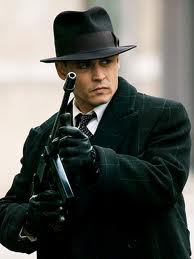
If you look at images of people taken before mid 20th century, you'll notice that almost everybody was wearing hats. In those times, people would often wear top hats or bowler hats but, by the 20th century, people started wearing the ubiquitous Fedora hat as you can see in any gangster movie set in the 1920s and 1930s.

But, today, almost nobody wears hats and Fedora-wearing gangsters seem to have disappeared everywhere. The trend is confirmed by a search on Google Ngrams. Here is, for instance, the result for "Fedora hat". You could call what we see here as "peak Fedora" in analogy with the concept of "peak oil"


Searches for other types of hat confirm that we see a relatively recent phenomenon taking place during the second half of the 20th century. For instance, John Fitzgerald Kennedy was the last US president to wear a top hat at the inauguration ceremony, in 1961, just as Abraham Lincoln had done, long before. Afterward, hats disappeared from the heads of US presidents, just as of most ordinary people.

So what happened that caused the near disappearance of a clothing item that had been commonplace all over human history? Surely, fashion changes all the time but it is not always just a question of whim. There are often practical reasons: think of the uncomfortable corsets that disappeared in the 1920s, when women became more active in everyday life and needed more practical ways of dressing.

For hats, the story may have been different. A top hat may be a little clumsy to wear but surely it doesn't have the same practical problems of a corset. So, the decline of all kinds of hats probably comes from a different factor: the importance of hats as status symbols.

All over human history, hats have been used to separate the upper classes from the lower ones. In the Western World, it would have been unthinkable for workers or peasants to wear top hats, just as the upper class wouldn't even dream of wearing berets. Wearing or not wearing a certain type of hat was a choice determined by one's social status. So, it is in social factors that we can probably find the explanation for the demise of hats.

The 20th century saw a strong trend toward higher social equality in the Western World, at least for a while. Here are the data for the Gini coefficient for people's incomes in the US (a parameter proportional to economic inequality). Other western countries show similar patterns


As you see, there occurred something that we could call "peak equality" in the 1960s-1970s. This peak corresponds well to the disappearance of hats. It makes sense: in a society where wealth is reasonably well distributed, excessive display of one's status may be seen as poor taste. Many societies and ideologies that theorize equality have emphasized the concept that everybody, rich or poor, should wear the same kind of hat: think of the clothing that the Chinese wore at the time of the cultural revolution. Then, if everyone wears, say, the Fedora hat, what's the point of wearing it at all? You may as well leave it home. This is probably the main factor that made hats mostly obsolete in the Western World.

But things may be subtler than this. Although in the early 20th century social inequality had become less evident, it still existed. And people are natural hierarchical animals; they need to establish hierarchies. There lies the problem: hats were good status symbols as long as social mobility was low and people were born with a certain social status. In those times, a worker might have been able to afford a top hat, if he really wanted, but wearing it in public would have been unthinkable for him. But, in the 20th century, people had become socially mobile and also geographically mobile while, at the same time, monetary wealth rapidly became the main marker of social status. So, if you saw someone wearing a top hat, was he really rich or was he a cheater? It was hard to say. What was needed was a more robust social marker; something expensive enough that would provide a direct and reliable indication of a person's wealth. And it was found in the 1950s: the private car.

The private car had what was needed to be an excellent status symbol in the new social and economic structure. The shift to suburban life made private cars not anymore a luxury but a necessity. Then, cars were expensive enough that people had to commit a substantial fraction of their budget to buy one. And the industry soon provided a range of models with a price spread that selected buyers according to their financial status. Add to that the clever marketing idea of the "model of the year" and soon buying a car became the way to keep up with the Joneses. It would strain the budget of suburbanites enough to provide an immediate and reliable signal of what was the income of the owner of a certain model of car.

Just as top hats were oversized and overexpensive for their practical purpose, cars soon became oversized and overexpensive for their practical purpose. The extravaganza of tailfins was a phenomenon of the late 1950s and early 1960s, but it was not so bad as the present-day fashion of the monstrosities that go under the name of "sport utility vehicles" (SUV). (image source: Bizarro.com)


SUVs may be seen as a bad case of mechanical obesity, but most cars on the road are overexpensive and underused: they are idle most of the time and they are used only for a small fraction of their load capacity. All of them, so far, had their main reason to exist in the fact that they served their purpose of status symbols. But the situation is rapidly changing: the trends toward social equality changed sign in a phenomenon called "The Great U-Turn" that gradually brought us back to the inequality levels of the 19th century, when people wore top hats. The reasons for this evolution are complex and not completely understood (but there are hints that it is related to fossil fuel depletion) In any case, these epochal changes can't be without consequences for transport.

Society is now splitting in two social classes: the very rich and the very poor; while the middle class is being squeezed out of existence. Stuck in the suburbs, the poor (the former middle class) desperately need transportation but they don't care anymore about keeping up with the Joneses. It is more a question of survival and any contraption that moves on wheels will do for them. The rich, on their part, don't really need cars to show their wealth. They compete with people in the same social class by means of much more expensive status symbols: mansions, estates, art, private jets, or whatever. For both the rich and the poor, cars cease to be a status symbol and become part of the concept of transportation as a service (TAAS). This concept includes both the traditional public transportation systems, from buses to trains, as well as the new forms of individual transportation made possible by the development of new technologies.

As a consequence of these trends, private cars are going to become as obsolete as top hats. That doesn't mean reversing the inequality trends. The rich will still ride luxurious vehicles, they just won't own them anymore, normally, just like when they travel first class on planes and trains. The poor will use TAAS to the extent they can afford it, otherwise they'll have to walk. That will be a good opportunity to abandon the bloated suburbs of our times and rebuild human-sized cities. The number of running cars will drastically diminish and those that will remain will mostly be of the right size for what they are needed. That means we'll use fewer fossil fuels, we'll reduce the emissions of greenhouse gases, and apply a lower pressure on the Earth's ecosystem.

Don't take all this as a praise for social inequality. If it were for me, I would much prefer to live in a world where people are valued for what they give rather than for what they own. But that's not the way our world works, today. There are some ongoing trends that we can't ignore. The demise of the wheeled dinosaurs that have plagued us for such a long time might be quite rapid (a true Seneca Collapse) and that will be a good thing.

By the way: we'll also wear hats again.


Who

Ugo Bardi is a member of the Club of Rome, faculty member of the University of Florence, and the author of "Extracted" (Chelsea Green 2014), "The Seneca Effect" (Springer 2017), and Before the Collapse (Springer 2019)