Showing posts with label social inequality. Show all posts

Tuesday, January 23, 2018

How long will the rich be willing to share the roads with the poor?


In Ray Bradbury novel "Fahrenheit 451" we are told of a world with no private cars (above, a still from the 1966 movie by François Truffaut). Bradbury had correctly understood that dictatorships not only tend to burn books but also don't like their citizens to own private cars. In this post, I argue that the growing social inequality in the West may soon lead to the demise of the private car for the middle class. This evolution may be helped by such concepts as TAAS (transportation as a service). 


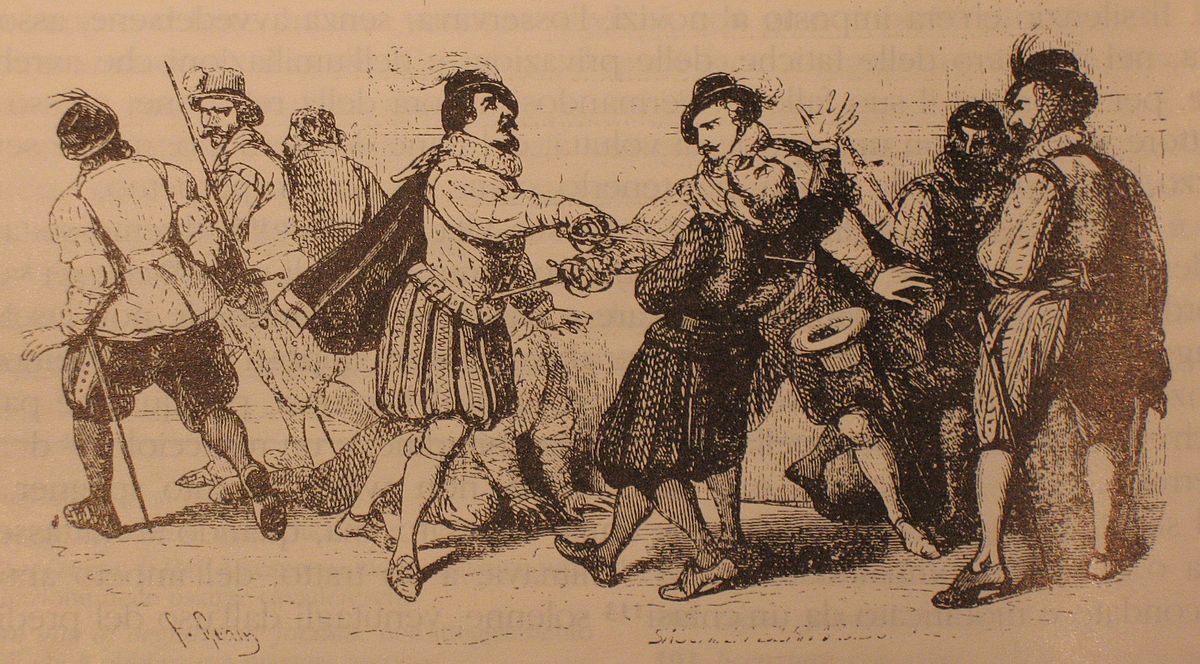
In his "The Betrothed", (1827) Alessandro Manzoni tells us of how a dispute on the right of the way led to a bloody duel between two noblemen. The story takes place during the 17th century and it seems that, at that time, whether one should cede the way to another was a question of rank.

In our (perhaps) enlightened times, this attitude looks absurd. When you see a stop sign at a crossroad, you are supposed to respect it, independently of whether you drive a rusty Toyota Corolla or a shiny Porsche Cayenne. But, if you think about that, the rich must be very unhappy about having to share the road with the poor and their clunkers. They might well be thinking of ways to have the street all for themselves, avoid traffic jams, and regain the mobility that cars provided when there weren't so many of them.

Is it possible? Well, think of this: the diffusion of private cars in the Western World, and in particular in the US, took place during a period when inequality was declining and reaching values which were possibly the lowest in modern history. But things have changed a lot since then. Here are some data for the Gini Index in the US (from the US Census Bureau)

The Gini index is a measure of the income distribution: it is between a minimum of 0 and a maximum of 1, but in practice, it is between 0.2 and 0.7. The larger the Gini index is, the higher is inequality. And you see how, during the past decades, inequality in the US has been increasing. Similar trends can be seen in other Western countries. 

So, the concept of "public roads" for everyone was developed in a historical period when the Gini index in the US was around 0.35. Today it is around 0.45. That's a very significant variation which is surely destined to have important social consequences. I was telling you before that in Italy during the 17th century, the right of way was determined by one's social status. So, what was the Gini index, then? We don't have values for Italy but, according to Ourworldindata, the Gini index in England was of the order of 0.5 in the 18th century, close to the current value of 0.45 for the US. Just like the nobles of that time, our modern nobles may well think that there is no reason for them to share the road with the commoners. So, what may happen?

For one thing, the concept of "public road" is being eroded in various ways. In the US it is done under the name of "gated communities" whereas in Europe you see entire sections of cities declared off-limits to cars by local governments, unless you are a resident. Another way to expel the poor from the street is to make cars or fuel very expensive, that can be done by means of taxes and that's traditionally done in Europe -- so far that has not prevented the poor from using cars, but it may in the near future. 

Increased costs may have already reduced traffic in some regions of the world. In Italy, the consumption of gasoline is down to nearly half of what it was ten years ago. But in the US, the situation is far less dramatic. Other regions of the world show intermediate trends. On the whole, private cars are not growing in numbers, but they are not disappearing, either. There are good reasons for this.


The problem is clear: there is no way that you can serve this kind of urban environment at a reasonable cost with conventional public transportation, buses or trains. And, of course, the people living there have no place where they can go on foot. So, they will try everything they can to stick to their cars. It is the only way they have to move around. 

A further, and somewhat perverse, characteristic of private cars is the fact that they have a considerable capital cost. So, once you made the effort of buying one, driving an extra mile (the "marginal mile") is not so expensive. Actually, the more miles you drive, the less each mile will cost and this is an incentive to drive more. 

So, it looks like a no-win situation for the rich, unless they really want to create a
zombie apocalypse in order to expel the poor from the roads. But there is another possibility: it is called "Transportation as a service" (TAAS). This is basically a hi-tech rental service. The idea is that you don't own a car anymore, but you rent it as you need. Theoretically, TAAS should be less expensive than the current scheme because you share the same car with other people. And middle-class suburbanites should be happy to use TAAS. 

But, as it often happens, technological changes bring about unexpected social changes. With TAAS, you don't have anymore the "marginal mile" effect, so that in order to save money you have only one strategy: cut the number of miles traveled. With the current trends of rising inequality and impoverishment, suburbanites will be forced to cut all the non-strictly needed trips. 

Not just that: the concept of TAAS allows differential tariffs leading to the possibility of a control of the traffic flow unthinkable today. Want to use TAAS during the rush hour? You are welcome, but you must pay more. Want to drive in a posh shopping area? Again, you are welcome, but you have to pay for the privilege -- or, maybe, sorry, but you don't belong to the right club. But, in exchange, we can offer you a special TAAS deal if you go shopping at the supermarket tonight at 3:00 am. 

In the end, TAAS may well sweep the poor out of the public roads even faster than the current trends are doing. Will we arrive at a point when priority at crossroads will be determined by the social status of drivers, as it was in the 17th century? We cannot say, but TAAS vehicles could be programmed to behave exactly in this way. All traffic lights will be green for those who can pay.

Of course, this is not a fault of the TAAS scheme in itself. Transportation as a service is a good idea that should bring us a more efficient transportation, less noise, and less pollution. The problem it is the result of the increasing inequality in society which, in turn, is related to the gradual disappearance of our energy slaves, fossil fuels. If we don't find a way to replace fossil fuels with something equivalent to power our society, we will return to the kind of world that Manzoni described to us. A world where you could be killed because someone thought he was nobler than you and wanted the right of way.  


Below: an illustration of Manzoni's novel "The Betrothed." It is the scene when two aristocrats quarrel over a question of priority and the result is a duel in which one of the two is killed. 


Thursday, September 14, 2017

Is it a Bad Idea to Have Fewer Children? Jorgen Randers at the Summer Academy of the Club of Rome in Florence


Jorgen Randers speaks at the 1st Summer Academy of the Club of Rome, in Florence, Sep 2017


The Summer Academy of the Club of Rome saw an interesting debate when a young participant asked to take the floor and speak about what he and his group were seeing as a problem: the current tendency of having fewer children. He showed data about the resulting unbalanced age distribution with too many old people who turn out to be a burden for society. And he said that having such an unbalanced distribution could be a disaster in the case of an economic downturn or even a collapse.

Jorgen Randers produced a strong response to this presentation. I am reporting from memory, but I think I am being faithful to the gist of what Randers said, which was something like this:

"Young man, you gave a very bad presentation. I think it was truly horrible and you should stop giving it. You see, the problem you are presenting is a completely fake problem. It comes from the fact that, in the past, an agreement had developed in most Western societies that the families would provide for children, whereas the state would support the elderly. Now, of course, with more old people, the state must pay more. But we forget that having fewer children the burden for families - and for society - is much reduced. So, there is a simple solution to what you see as a problem: raise the retirement age. That's what my country, Norway, did. They leave citizens to choose when to retire, but they give favorable conditions to those who retire later. And most citizens decide to retire at a late age. Look at me: I am 72 years old, I am still working and I think I'll keep working until I turn 85; then maybe I'll retire. But I keep working and I am not living on a pension, so I am not a burden for society. And I am still caring for my 99-year old mother, who is not a burden for the younger generations. So, the problem you pose is mostly of our own creation and it vanishes when compared with the much larger and difficult problem of overpopulation. We need to take into account that there exist limits to growth and that if we want to solve the problem of overpopulation, we need to have fewer children."

This story is interesting for various reasons. Perhaps Randers was too harsh on the young activist, who wasn't saying that we should keep having many children. But it is remarkable how emotionally charged the issue of population is. For some people, any effort aimed at reducing the burden of the human population on the ecosystem amounts to little less than a sacrilege. An insult to the human right to dominate everything which is not human.

On the reasons for this attitude, I can say little, but it seems to be rather common. I was surprised to see it appearing in a meeting dedicated to sustainability and, surely, it has to be even more common outside the world of people concerned with this subject. As a further example of this humanocentric attitude, I think it is appropriate to reproduce here a post that I published last year on "Cassandra's Legacy"

(note: The presentation criticized by Randers is available upon request, just ask me - ugo.bardi(thingette)unifi.it)


Saturday, June 18, 2016
If Switzerland had a Sahara Desert, it would be a small Africa. Does the world really have an "overpopulation problem"?


Dealing with such issues as oil depletion and climate change is already politically and emotionally charged but, at least, these are physical problems that we can examine using the scientific method. But overpopulation? It is the perfect recipe for an instant politicized quarrel.

The movie "Population Boom" by Werner Boote is a good example of how emotional the population question can become. It starts almost immediately with a potshot at the Reverend Malthus, accused to "have predicted a catastrophe for 1860" (something that poor Malthus never said.). Then, it goes on for one hour and a half in the attempt to demonstrate that there is no such a thing as an "overpopulation problem." Rather, the film's thesis is that the world is seeing a conspiracy by the elites of the rich countries who are trying to stop the people in poor countries from having as many children as they want so that they could become rich, too, and challenge the world dominance of the present elites.

If we accept the idea that all opinions are legitimate, then also this one should be - even though probably a bit too extreme for most of us. The problem is that the way the film tries to demonstrate its thesis oscillates between the boring and the silly; without ever providing a serious argument. Mainly, we see the filmmaker, Mr. Werner Boote, walking around while carrying his umbrella in places where it never seems to rain. In his ramblings, Mr. Boote interviews people who, frankly, don't seem to have a clue about overpopulation, except for seeing it as an invention of the evil Western Elites (and the same is true for global warming, explicitly defined as such in one of the interviews).

Most of the arguments made in these interviews are so silly that they are not even worth deconstructing. Just as an example, in a scene we see Mr. Boote (for once without his umbrella) discussing with a man who tells him that Africa is not overpopulated because it has only 40 inhabitants per square km, compared with the 170 of Europe. Then, the man takes Boote somewhere on top of a hill and he shows him an empty landscape, saying, "do you see? Africa is not overpopulated!"

Now, there are several problems here. First, the numbers are wrong, at least in part. The datum for the population density in Africa seems to be correct, but the population density in Europe is 105 inhabitants per square km, not 170. Maybe Mr. Boote's informant meant Western Europe, but if you take that as meaning the European Union, then the population density still is only 116. Then, one would be tempted to remind to Mr. Boote's informant that Europe doesn't have a Sahara desert; to say nothing about the Kalahari desert and other areas unsuitable for human occupation in Africa. So, he conveniently forgets that an African country such as Nigeria has about the same density of population as Switzerland (nearly 200 people per square km), to say nothing about Rwanda, that has 460 people per square km (more than twice than Switzerland). Finally, one could show to Mr. Boote and to his informant the Yosemite Valley or the Death Valley and then tell them: "you see? Almost no one lives in California!

I could go on, but I think this is enough for this movie. Let me just add that if you think that the poor do not pollute the ecosystem, you would do well reading this post by Jacopo Simonetta.


Thursday, June 16, 2016

Social Equality and the Destruction of the Planet

In this post, Jacopo Simonetta asks a fundamental (and politically incorrect) question: are we sure that social equality would be good for the environment? The answer turns out to be not politically very correct. (U.B.)


by Jacopo Simonetta


Exaggerated inequality is surely a major problem in today's societies, and it keeps increasing. I, too, certainly believe that this scandal must end, but the topic of the article is another one: is it true that redistribution of wealth would have a good effect on the Earth health? Many very influential people believe this, but I am not so sure.

Evidently, affluent people consume much more than poor people do, but how much? As far as I know, there are no studies correlating the environmental impact and social classes but, as starting point, we could compare how CO2 emissions change with income. (data Word Bank and Wikipedia respectively). 


Social equity and consumption: Comparison between per capita income (in blue) and CO2 emissions (in red).


It is clear that CO2 emissions increase with income, but less than proportionally in the central part of the curve. In fact, in very low incomes, the increase in emissions is very fast against modest increases. Then they go up rather slowly, to return to peak with the very, very rich people. Important local fluctuations are also correlated to climate, geography, local traditions, social organisation and so on.

Now, as a mental exercise, we can take for good the statement that 1% of the global population appropriates 50% of world income. This means that about 75 million people earn an average income of 500,000 $ per capita per year. So, let us imagine that we can distribute all this wealth among the remaining 99% of the world population (let's call it "Operation Robin Hood"). This means more or less 5,000$ per capita. Even for a large part of the western middle class, this would be a big help. For the majority of people this would drastically change one's life. Billions of people would finally eat to satiety, dress decently, live inside houses, send their children to school, heal the sick and much more. People a little higher in the income ladder could get a new car, go on holidays, and so on.

Very good, but what would be consequences for the planet?

Let's try to analyze the question. As a rough approximation, we can start classifying humanity in four meta-categories: the very rich (let us presume they are 1%, so about 75 millions); the affluent (let us presume 1 billion people); the Middle class (according to "The Economist", about 3 billion people); the poor (may be 2 billion), and the very poor (according to FAO, about 1 billion).

Comparing per-capita income and emissions in different countries, and assuming that there are all the social classes in each country, we can argue that the very rich produce about 20 tons of CO2 each per year. The affluent 10 tons each; the middle 6 tons each, the poor 2 tons each, and the very poor 0,1 tons each. For a total amount of about 36 billion tons of CO2. “Operation Robin Hood" would lead to disappearance of the lower class and a perceptible improvement in the life style of the poor and the middle class. At the same time, also the super-rich would disappear, while nothing would change for the affluent people.

And what would that mean in terms of total CO2 emissions? Well, we just multiply the per capita emissions by the total number of people per category. The result is a grand total of about 55 billions tons, that is a 50% increment with respect to the present emissions. Social equality doesn't seem to be so good for the planet.

But there is more: Operation Robin Hood would produce a sensible reduction in mortality, and probably an increment in natality too, among low wage people. So a sharp population increase, at least for one or two generations.

Evidently, that's just an example, not a realistic simulation. But the core conclusion, that a better life for the majority of people would be disastrous for the planet, is consistent with more sophisticated models available. In the 2004 edition (Limits to Growth: The 30-Year Update), the Meadows group published a scenario where they supposed that since 2002 the birth rate is 2 children per woman and industrial production is equally distributed to everybody at a level 10% more than the global mean in the year 2000. It means much less for rich people and much more for the poor.


Word3 scenario with birth control and equal distribution of goods.(From Meadows et al. 2004)


Skipping the details, we can see that in this scenario there is a period of abundance that lasts some 20 years more than it does in the basic scenario (Business as Usual). But later the system collapses in a very similar way. And note that none of the people asking today for a more equal wealth distribution don't want any sort of birth rate control. We have no published scenario of what the outcome of these hypotheses wold be, but is not hard to argue that with a growing population andntemporary wealth distribution the system would collapse very quickly.

Another model that's relevant to our topic is "HANDY, From a scientific perspective this model, derived from an ultra-famous one by Lotka and Volterra, is too simplified to represent a system as complex as an advanced society. In particular, it neglects feedbacks existing between hierarchy, social complexity, specialization and the capability of the societal system to absorb low entropy from the outside. Unfortunately, this is one of the core feedbacks which shape the evolution of human societies. This largely reduces the viability of the model and explains the absurdity of some of the scenarios proposed. Anyway, "HANDY" has the merit of being the first model to try to introduce the social element inside a dynamic model. Here are some of the results of the model.


The above result is rather absurd since it implies that the elites keep growing even after the commoners have collapse. However, on the whole, the results of this model can be seen at least as the indication that a low level of inequality tends to shape more stable and resilient societies. In my opinion, a cursory glance at history seems to confirm this hypothesis. It is consistent also with what we have said before and with Word 3. A low level of inequality produces a more cohesive society and a highly legitimate leadership which tends to lower and to extend the peak phase of a society.

But, and this is the point, social equality is not sufficient to avoid systemic collapse if society is based on non-renewable resources.

After all, we have already seen all of this in the real world. Please observe the curves of USA and China CO2 emissions from 1990 and 2010.


The US economy trudged along with a low GDP increase completely concentrated in the top class, with a deterioration of the life level in the middle and low classes. The result has been a modest reduction in emissions.

In the same time, in China the life of the large majority of people improved and emissions skyrocketed. Because of that, the population too increased, in spite of a low birthrate. Just imagine to duplicate the China experiment: do you really believe that the Planet will survive?

Conclusions

It is true that billionaires are rich and I am not; this makes it possible that they are greater experts than me about money and power. But, nevertheless, it seems to me that, historically, smart leadership have always managed to redistribute a part of their revenue in ways useful to consolidate their legitimacy and hence their political power. It means that a partial redistribution of incomes would be to the advantage, first of all, of the top class people. But this is a lesson that the present day élite, largely consisting of pirates and sociopaths, has apparently forgotten.

Secondly, such action surely would improve the life of the poor, but just for a short time because, if done worldwide, the experiment would end in an unimaginable global catastrophe. Does this mean we have to be thankful to our kleptocrats? I don't believe so. It means that the reduction of inequalities must be done by reducing the income of the very rich and not by improving the commoners' wages. But this perspective is refused by everyone: right and left, south and north, up and down.


For this post I warmly thank my friend Miguel Martinez who corrected my limping English.

Who

Ugo Bardi is a member of the Club of Rome, faculty member of the University of Florence, and the author of "Extracted" (Chelsea Green 2014), "The Seneca Effect" (Springer 2017), and Before the Collapse (Springer 2019)