Tuesday, January 30, 2018

Donald Trump: the Evil Monster


Sorry about this a little rant of mine. And sorry also for the click-baiting title. I promise that from now on I won't publish more posts about Trump (not too many, at least) (Image source)


When I publish something about Donald Trump, I usually face criticism. People tell me that they don't expect posts about Trump in this blog -- it is off topic. And comparing Trump to Emperor Hadrian - as I did - seems to make some people angry. Maybe they are right, but I suspect that they say so in part because I am not usually describing Trump an evil monster (apart from the title of this post, to be intended as a clickbaiter!).

To tell you frankly, I find Trump not a monster, and not evil, either. He is a fascinating phenomenon, the result of factors well worth trying to understand. No matter how outrageous, nasty, politically incorrect, insulting, sexist, racist, and more, Trump is successful. And there are reasons for this success. Look at what he said about climate change.

From "The Independent."
"There is a cooling, and there’s a heating. I mean, look, it used to not be climate change, it used to be global warming. That wasn’t working too well because it was getting too cold all over the place.”

“The ice caps were going to melt, they were going to be gone by now, but now they’re setting records. They’re at a record level.”

If you read this blog, you are probably the kind of person who knows that what Trump says is completely wrong. But think of any discussion you could have with some "normal" person, not a scientist. These are exactly the arguments that you would face. And you would have a hard time in convincing them that these statements conflict with facts.

That's the way the discussion is - it is not science, it is politics. And politics has different rules: it is not based on facts but on trust. You can't convince people that climate change is real with facts. You can only convince them if they trust you. And those people who mistrust science will never be convinced.

Trump, instead, follows the rules of politics: he puts himself in the role of the ordinary guy who is not a scientist. And he speaks the way an ordinary guy would speak. He gains trust because he speaks like the people he speaks to. That's why he is successful.

We'll never win this battle if we don't understand this point. Not that scientists can (nor should) transform themselves into politicians, but we need to rebuild the trust in science. That can be done, but it takes time and effort and, in particular, recognizing that if this trust was lost is, in large part, our fault (I mean, of the scientists).

Maybe this man is a genius, maybe an evil genius, maybe a numbskull who found himself by chance in the right place at the right time. I have no idea. But, as I said, he is an (evil) genius. We'll see how this story evolves.


Sunday, January 28, 2018

Donald Trump: Wise Emperor or Condemned to Damnatio Memoriae?


About one year ago, shortly before the US elections, I published a post on Cassandra's Legacy where I wondered what Donald Trump and Hillary Clinton would look like if they were Roman Emperors. I reasoned that the Roman Empire of the 1st and 2nd Century AD was facing many of the same problems which the American Empire is facing nowadays: declining resources, excessive costs, overextended military apparatus, and others. I concluded that Hillary Clinton might have resembled Emperor Trajan, who embarked on a difficult and ultimately self-defeating military attempt to expand the empire. Trump, instead, might have looked like Emperor Hadrian, Trajan's successor, who took the opposite path: stopping all wars of expansion and consolidating the Empire within its borders.

One year after Trump's election, it seems that my interpretation was correct. Trump is doing more or less what Hadrian did some 2.000 before him. Apart from not having engaged in new wars, Trump's tax plan has a very transparent purpose, that of decoupling the US from the globalized economic system. (an interesting discussion on this point is provided by Dr. D. on "The Automatic Earth"). That may not be so apparent by listening to what Trump says, but the insults, the threats, and the outrageous behavior are mainly noise that masks the direction in which the Trump administration is trying to move - and it is like steering a transatlantic liner. It is slow.

In short, Trump is engaged in reversing the grand plan that the Neocons had devised in the 1990s, after the fall of the Soviet Union. At that time, the idea of a US-led World Empire seemed feasible and the plan was explicitly laid out in the "Project for a New American Century" published in 1996. It included such details as a "New Pearl Harbor" needed to provide the propaganda justification for the enterprise. It seemed to work, for a while, but the plan soon bogged down. It was just too expensive.

The Romans abandoned the idea of a World Empire at some moment during the 2nd century AD. The modern Americans may not have abandoned it completely and, if Trump is taking the role of Hadrian, the future may bring new equivalents of Trajan in Washington. But that would change little. All empires go through the same cycle of growth and decline - it is the hard law of the Seneca Cliff. Even Hadrian, as wise as he was supposed to be, couldn't save the Roman Empire. At best, he managed to keep it alive a little longer.

So, should we think of Trump as a wise emperor? In a certain sense, yes, but we can't forget his responsibility in setting back the last-ditch attempts of stopping the ongoing climate disaster. So, in the future (if there will be one for humankind), Trump may rather be subjected to the ritual called the "damnatio memoriae" which the Romans reserved to bad emperors after their death. That was the case of Emperor Nero, said to have burned the city of Rome. Trump could be accused of having done much worse than that.


From "Cassandra's Legacy", November 6, 2016

Which Roman Emperor Would Donald Trump Be?

By Ugo Bardi


Comparing Donald Trump to Emperor Hadrian (76 – 138 CE) may seem ludicrous after that Marguerite Yourcenar presented Hadrian to us as a wise and enlightened emperor in her book "Memoirs of Hadrian". Yet, Hadrian found himself facing problems similar to those that all US presidents face nowadays. And some of Hadrian's solutions were not so different than those that Donald Trump is proposing today; for instance, building a wall to keep the Barbarians out. 


All empires in history have gone through similar trajectories: rapid expansion at the beginning, then stasis, then decline and collapse. That was the trajectory of the Roman Empire and there is no reason why the modern empire that we call "Globalization" would follow a different one. It seems clear that the Global Empire has reached its limits and it is poised for a decline in the future.

So, we find ourselves in the conditions that the Roman Empire faced during the 1st and 2nd centuries CE. The turning point for the Romans may have been the battle of Teutoburg, 7 CE, where three Roman legions were annihilated by a band of German barbarians. That was a signal that something wasn't working so well any longer with the Empire. The cost of wars had simply become too much for an Empire that was short of resources and had reached its practical limits to expansion. Then, the Emperors faced a dilemma: keep an aggressive stance and try to continue the expansion or retrench and defend what the Empire already had?  

Different emperors gave different answers to the question. Most of them were prudent; engaging only in cautious and limited conquests. But some were ambitious; the best example being Emperor Trajan (53 – 117) who embarked on a difficult campaign against Dacia with the objective of gaining control of the gold mines in the region. The campaign was a success in military terms, but it was extremely expensive and it badly strained the finances of the Empire. Trajan's successor, Hadrian, hastened to stop all attempts of expansion, to retreat from areas that were not defendable, and to sign peace treaties with the traditional enemies of the Roman Empire. His legacy includes Hadrian's wall, a fortified line that defended the Roman territories in Britannia from the Northern peoples. He also built and reinforced other defensive lines that would become the standard defense element for the Roman Empire. Hadrian may have been a wise emperor, but it is dubious that the walls were a good idea, and their costs may well have bankrupted the Empire in the long run.

Now, fast forward to our time: the next Global Emperor may be Donald Trump or Hillary Clinton. Both will face the same problem: defending the vast Global Empire has become terribly expensive in a phase of diminishing resources and with the threat of climate change looming. Trump seems to have understood, at least in part, that some limits have been reached. His foreign policy is non-interventionist. It also includes a reduction of the financing for NATO and negotiates with Russia. It is not unlike Hadrian's policy of retrenchment and, like Hadrian, Trump plans a defensive wall at the borders. Just as for Hadrian's fortifications, the wisdom of this idea is at least dubious. 

Conversely, Trump's adversary, Hillary Clinton, has been much more aggressive in the past as secretary of state and she will probably maintain that stance as president. If Clinton were a Roman Emperor, she would look more like Trajan in her attitudes, or perhaps like Germanicus, a Roman general and candidate emperor who led the legions into a dangerous military adventure in Germania in 15-16 CE, until a more cautious emperor (Tiberius) recalled him and probably got rid of him by poisoning. Where will President Clinton lead the Global Legions? As the Romans learned, victory is never guaranteed but it is always expensive. And excessive military expenses are, normally, what takes empires to their doom. 

Whatever it happens with the upcoming elections in the US, squandering our remaining resources in new wars or in defensive walls will not be a good idea. In addition to resource depletion, we are facing a problem that the Roman Empire didn't face: that of rapid climate change that may do to us much more damage than any Barbarian army did to the Romans. Neither Trump nor Clinton seem to have understood this point.

Will we ever find a wise Emperor who will lead us to fight against the real threat, that of climate change? The future will tell. 

Friday, January 26, 2018

Delusions of Grandeur in Building a Low-Carbon Future


Some excerpts from Carey King's excellent paper titled "Delusion of Grandeur in building a low-carbon future" (2016). By all means worth reading: it identifies the delusionary approach of some policy proposals. Image Credit: K. Cantner, AGI.


.... the outcomes of economic models used to inform policymakers and policies like the Paris Agreement are fundamentally flawed to the point of being completely delusional. It isn’t the specific economic assumptions related to the “low-carbon” transition that are the problem, but structural flaws in the economic models themselves.

There is a very real trade-off between the rate at which we address climate change and the amount of economic growth we can expect during the transition to a low-carbon economy, but most economic models insufficiently address this trade-off, and thus are incapable of assessing the transition. If we ignore this trade-off, or worse, we rely on models that are built on faulty premises, then we risk politicians and citizens revolting against the energy transition midway into it when the substantial growth and prosperity they’ve been told to expect will accompany the low-carbon transition don’t materialize. It is important to note that citizens are also told that doubling-down on fossil energy also only provides growth and prosperity. But this is a major point of this article: mainstream economic models can’t tell the difference. There are foreseeable feedbacks of a fast transition to a low-carbon economy that increase the risk of major recessions.


The AR5 indicates that if the world invests enough to reduce greenhouse gas emissions over time — such that total annual greenhouse gas emissions are practically zero by 2100 — to stay within the 450 ppm and 2-degree-Celsius target, then the modeled decline in the size of the economy relative to business-as-usual scenarios is typically less than 10 percent. In other words, instead of the economy in 2100 being 300 to 800 percent larger than in 2010 without any mitigation, it is only 270 to 720 percent larger with full mitigation. Meanwhile, there is no reported possibility of a smaller future economy. Apparently, we’ll be much richer in the future no matter if we mitigate greenhouse gas emissions or not.

This result is delusional and doesn’t pass the smell test.

Another flawed piece of the framework in the IAMs is that they assume that factors in the economy during and after a low-carbon transition will remain at or return to the statistically positive trends of the last several decades — the trend of growth, the trend of high employment levels, the trend of technological innovation. Those positive trends change over time, however, so it is faulty to assume they’ll continue at historic levels independent of the need for rapid changes in the energy system. They also assume that energy costs will not significantly increase over the long term. Further, they extrapolate trends in growth, employment and technology from the past and current carbon-based economy to apply to a future decarbonized economy in ways that represent guesswork at best, and ideology at worst.


Perhaps most importantly, IAMs do not consider the substantial negative feedback between high energy costs and overall economic growth. Negative feedback means that when one factor increases (energy prices, for example), another factor consequently decreases. Many of us know from practical experience that if gasoline costs too much — like when it was near $4 per gallon in 2008 — it may eat into our budget to such an extent that we can’t pay all our bills or can’t pursue hobbies. On a personal level, then, we see that increased gas prices cause decreased discretionary spending — a negative feedback. This idea can be extended to the entire economy’s budget and income.

..... the models currently answer a question that is barely useful: “If the economy grows this much, what types of energy investments can we make, and at what rate?” The models should address the question we really need to answer: “If we make these energy investments at this rate, what happens to the economy?”


There is a fundamental conflict between achieving low- or zero-carbon energy systems and growing an economy. Both the scale and rate of change during a low-carbon transition matter. So, let’s create macroeconomic models that can plausibly replicate historical trends of the most important energy and economic variables in times of high energy investment, recession and growth, so that we have confidence that we can ask relevant and informative questions about how low-carbon investments impact economic growth. Let’s stop deluding ourselves by using models that assume answers we want to see.


Read the complete paper (open access) at this link


Tuesday, January 23, 2018

How long will the rich be willing to share the roads with the poor?


In Ray Bradbury novel "Fahrenheit 451" we are told of a world with no private cars (above, a still from the 1966 movie by François Truffaut). Bradbury had correctly understood that dictatorships not only tend to burn books but also don't like their citizens to own private cars. In this post, I argue that the growing social inequality in the West may soon lead to the demise of the private car for the middle class. This evolution may be helped by such concepts as TAAS (transportation as a service). 


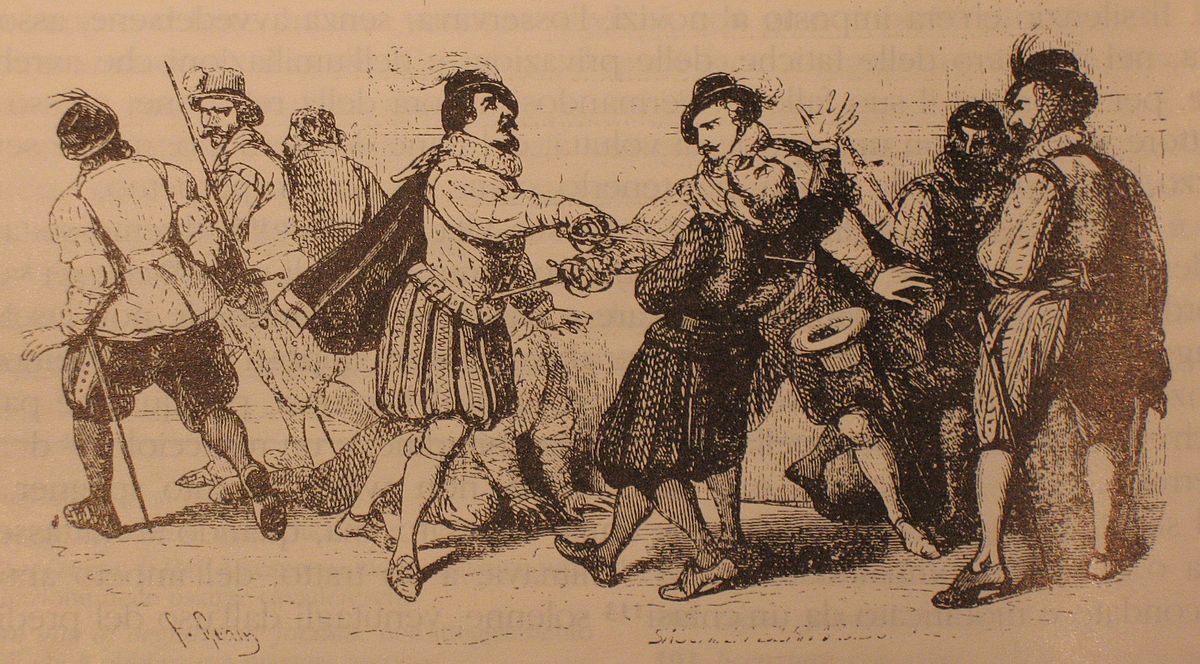
In his "The Betrothed", (1827) Alessandro Manzoni tells us of how a dispute on the right of the way led to a bloody duel between two noblemen. The story takes place during the 17th century and it seems that, at that time, whether one should cede the way to another was a question of rank.

In our (perhaps) enlightened times, this attitude looks absurd. When you see a stop sign at a crossroad, you are supposed to respect it, independently of whether you drive a rusty Toyota Corolla or a shiny Porsche Cayenne. But, if you think about that, the rich must be very unhappy about having to share the road with the poor and their clunkers. They might well be thinking of ways to have the street all for themselves, avoid traffic jams, and regain the mobility that cars provided when there weren't so many of them.

Is it possible? Well, think of this: the diffusion of private cars in the Western World, and in particular in the US, took place during a period when inequality was declining and reaching values which were possibly the lowest in modern history. But things have changed a lot since then. Here are some data for the Gini Index in the US (from the US Census Bureau)

The Gini index is a measure of the income distribution: it is between a minimum of 0 and a maximum of 1, but in practice, it is between 0.2 and 0.7. The larger the Gini index is, the higher is inequality. And you see how, during the past decades, inequality in the US has been increasing. Similar trends can be seen in other Western countries. 

So, the concept of "public roads" for everyone was developed in a historical period when the Gini index in the US was around 0.35. Today it is around 0.45. That's a very significant variation which is surely destined to have important social consequences. I was telling you before that in Italy during the 17th century, the right of way was determined by one's social status. So, what was the Gini index, then? We don't have values for Italy but, according to Ourworldindata, the Gini index in England was of the order of 0.5 in the 18th century, close to the current value of 0.45 for the US. Just like the nobles of that time, our modern nobles may well think that there is no reason for them to share the road with the commoners. So, what may happen?

For one thing, the concept of "public road" is being eroded in various ways. In the US it is done under the name of "gated communities" whereas in Europe you see entire sections of cities declared off-limits to cars by local governments, unless you are a resident. Another way to expel the poor from the street is to make cars or fuel very expensive, that can be done by means of taxes and that's traditionally done in Europe -- so far that has not prevented the poor from using cars, but it may in the near future. 

Increased costs may have already reduced traffic in some regions of the world. In Italy, the consumption of gasoline is down to nearly half of what it was ten years ago. But in the US, the situation is far less dramatic. Other regions of the world show intermediate trends. On the whole, private cars are not growing in numbers, but they are not disappearing, either. There are good reasons for this.


The problem is clear: there is no way that you can serve this kind of urban environment at a reasonable cost with conventional public transportation, buses or trains. And, of course, the people living there have no place where they can go on foot. So, they will try everything they can to stick to their cars. It is the only way they have to move around. 

A further, and somewhat perverse, characteristic of private cars is the fact that they have a considerable capital cost. So, once you made the effort of buying one, driving an extra mile (the "marginal mile") is not so expensive. Actually, the more miles you drive, the less each mile will cost and this is an incentive to drive more. 

So, it looks like a no-win situation for the rich, unless they really want to create a
zombie apocalypse in order to expel the poor from the roads. But there is another possibility: it is called "Transportation as a service" (TAAS). This is basically a hi-tech rental service. The idea is that you don't own a car anymore, but you rent it as you need. Theoretically, TAAS should be less expensive than the current scheme because you share the same car with other people. And middle-class suburbanites should be happy to use TAAS. 

But, as it often happens, technological changes bring about unexpected social changes. With TAAS, you don't have anymore the "marginal mile" effect, so that in order to save money you have only one strategy: cut the number of miles traveled. With the current trends of rising inequality and impoverishment, suburbanites will be forced to cut all the non-strictly needed trips. 

Not just that: the concept of TAAS allows differential tariffs leading to the possibility of a control of the traffic flow unthinkable today. Want to use TAAS during the rush hour? You are welcome, but you must pay more. Want to drive in a posh shopping area? Again, you are welcome, but you have to pay for the privilege -- or, maybe, sorry, but you don't belong to the right club. But, in exchange, we can offer you a special TAAS deal if you go shopping at the supermarket tonight at 3:00 am. 

In the end, TAAS may well sweep the poor out of the public roads even faster than the current trends are doing. Will we arrive at a point when priority at crossroads will be determined by the social status of drivers, as it was in the 17th century? We cannot say, but TAAS vehicles could be programmed to behave exactly in this way. All traffic lights will be green for those who can pay.

Of course, this is not a fault of the TAAS scheme in itself. Transportation as a service is a good idea that should bring us a more efficient transportation, less noise, and less pollution. The problem it is the result of the increasing inequality in society which, in turn, is related to the gradual disappearance of our energy slaves, fossil fuels. If we don't find a way to replace fossil fuels with something equivalent to power our society, we will return to the kind of world that Manzoni described to us. A world where you could be killed because someone thought he was nobler than you and wanted the right of way.  


Below: an illustration of Manzoni's novel "The Betrothed." It is the scene when two aristocrats quarrel over a question of priority and the result is a duel in which one of the two is killed. 


Saturday, January 20, 2018

Trump and Berlusconi: harbingers of the coming Seneca Cliff


Donald Trump and Silvio Berlusconi have many similarities as country leaders. I argue here that they are the symptom of a giant political transition which is reversing the trends that started more than two centuries ago with the French revolution.  Human rights have a cost and this cost has been paid, so far, by fossil fuels (our "energy slaves"). Now that our dark slaves are leaving us, who will pay? Not a small problem and the result seems to be an ongoing "Seneca Transition" catapulting us to a new and different world. 


After one year of Trump presidency, America looks more and more the same as Italy was when Berlusconi ruled it. I am not going to list the similarities between Berlusconi and Trump: it has already been done and everyone knows about the sex scandals, the outrageous behavior, the offensive way of speaking, all that.

For Silvio Berlusconi, this kind of behavior led him to be prime minister for a total of 9 years, over more than 20 years in which he strongly influenced Italian politics. Today, it looks perfectly possible that, at 81, he may become prime minister again with the coming national elections, in March, replacing the fading star of his heir, Matteo Renzi (aka "Berlusconi 2.0").

Donald Trump uses the same methods developed by Berlusconi and he seems to be attaining a remarkable political staying power. Fighting him, the American Left is making the same mistakes that the Italian left made with Berlusconi: demonizing him while aping his political choices. Actually, the American Left is doing even worse: at least the Italian Left never accused voters to be so dumb that they could be easily swayed by the propaganda tricks of a foreign power. A surefire way to win elections: first you tell voters they are morons, nay, traitors, then you ask for their vote.

But there is a method to this madness. The Left is making the mistakes it makes because it operates on the basis of an obsolete political paradigm. Most of the political struggle up to recent times has been based on a principle discovered first by Harold Hotelling in the 1920s (it is called the Hotelling-Downs model): he who controls the center, wins (it works also in economics and with chess).

There is a problem with this model: it works only if there is a political center. As I described in a previous post, that's not true anymore: today there are two centers and the way to win elections is to occupy one of the two, as Donald Trump perfectly understood. Hillary Clinton didn't and her defeat was unavoidable.


Once you take notice of this double-peaked distribution, it is clear why the demonizing of the man at the top doesn't work: the more you demonize him from the left, the more he is seen a hero from the right. This is also something that Donald Trump perfectly understands, but not the Dems, evidently.

And now, what's going to happen? In a previous post, I argued that political polarization is a necessary reaction of society to scarcity. Here I may add that Berlusconi and Trump are symptoms of a giant political phase transition just starting.

The origins of what we are seeing are in the 18th century when fossil fuels - coal at that time - generated a rapid economic expansion. The political response to the newly gained prosperity was the French Revolution, giving birth to the political movement that we call "the Left." The French Revolution introduced the concept of human rights and, traditionally, the Left has emphasized rights while the Right has emphasized duties.

Having rights is nicer than having duties, but the problem is that human rights have a cost and that this cost was paid, so far, by fossil fuels. Now that fossil fuels are on their way out, who's going to pay?

On this point, the Left has nothing to propose but empty promises and people are starting to understand that. That's the reason for the rise of the political Right everywhere in the world. It is a political phase transition that's wrenching us away from the familiar fossil-powered world and catapulting us to a different world.

Phase transitions are normally abrupt and often violent (part of the concept of the "Seneca Effect").  Surely, the French revolution was violent and abrupt and it would be a miracle if all the problems we'll face in the future will be leaders like Berlusconi and Trump and their heirs. They are verbally aggressive but, so far, not so much in physical terms. They are part of the transition, but they are not causing it and the transition will not end with them.

Where the transition will take us, it is impossible to say. What we can say is that a person who has only rights but no duties is a monster while a person who has only duties and no rights is a slave. Neither condition is appealing and, eventually, we'll find a compromise and settle for something in between. But it will take time.


Thursday, January 18, 2018

How to convince the public of the danger of anthropogenic global warming


Last year, the vagaries of life led me to chair a commission charged with examining the candidates for the admission to the Italian Chemists Association. It was a rather formal exam that was supposed to provide the successful applicants with the legal status necessary, for instance, for certifying chemical analyses. Overall, the applicants did poorly, but one of them, a young lady, did much better than the others. So much that I thought I could encourage her to do even better. So, let me tell you about a question I asked her during the examination.


Me. Dear candidate, I would like to conclude this exam with a question that may be a little outside your area of expertise, but which I think will give you a chance to show your understanding of some basic concepts of chemistry. The question is: can you propose an experimental test that would prove that human-generated greenhouse gases are warming the Earth?

Candidate...............................................................................................................................................................................................................................................................

Me. It is not such a difficult question. I am only asking you to apply to the problem what you know of chemistry and of spectroscopy.

Candidate...............................................................................................................................................................................................................................................................

Me. Let me help you. Maybe you can start by telling me something about the thermal effects occurring when you expose an infrared active gas to infrared radiation.

Candidate...............................................................................................................................................................................................................................................................

Me. I am sure that you heard about global warming. Can you tell me what is the mechanism of the so-called "greenhouse effect"?

Candidate..........................................................................................................................................................................................................................................................

Me. Well, I guess that it is time for the commission to retire to examine your application. You did well with the other questions, so don't worry.

____________________________________________


Now some comments:

- The question of the "proof" that humans are causing the observed warming is not an easy one to answer and indeed is a favorite question by anti-science trolls. For instance, this recent post on "Carbon brief" claims to bring this proof but if you examine it carefully, you'll note that it only proves the existence of a correlation between the CO2 concentration in the atmosphere and the temperature. Which is a strong indication in favor of the current interpretation of global warming but, strictly speaking, not a proof. Correlation, as it is well known, doesn't mean causation. Conversely, you can find a good discussion on the empirical evidence of anthropogenic global warming based on spectroscopic measurements in this post on skeptical science. This is what I hoped the candidate would have been able to devise by herself.

 -  The students that come out of our classes are persons who know so much about so little that, if the trend continues, soon they'll know everything about nothing. The young lady I had been telling you about went through five years of training in chemistry at a high-level university (at least in terms of Italian standards). Yet, she had learned strictly nothing about climate change, an issue that involves the physical survival of humankind (and of that young lady as well). The decline in the preparation of students is a qualitative consideration of mine, but it is confirmed by almost everyone I know who is involved with what we call "higher education," and not just in Italy. How it has happened that universities transformed themselves from enlightening institutes into brain-dumbing machines is beyond me to understand. But I think it is, mostly, because our society doesn't reward people for being smart (unless it is Putin's fault - as always).

-  Climate science is difficult. The basic principles of climate science are not so difficult, but their implementation in the real world is devilishly complicated. Try to answer the question of why the stratosphere cools when the troposphere warms and you'll see what I mean. Devilish, indeed. So, when I read someone proposing to educate the public in order that they may understand climate science, well, it is a laudable idea, but so difficult to be impossible. There are some valiant efforts, such as the "climate kids" site created by NASA, but, really, most of the well-intentioned people who are convinced that anthropogenic global warming is real, think so because they trust the scientists. It is mostly a question of trust, not of data.

- Our strategic plan seems to have been, so far

1. We educate the public in science and in Climate Science in particular.
2. A majority of people understand that Anthropogenic Climate Change is real and dangerous.
3. They elect wise and enlightened leaders.
4. The world leaders act swiftly and effectively against Climate Change.
5. The problem is solved.

Hmmmmmm . . . .


Sunday, January 14, 2018

Epistemology of Earthsea: Is the Universe a Machine?


Above, two characters of the Earthsea world: Ged and Vetch (Ged is the one with the scars on his face). Behind Ged, the Shadow. A wonderful image by Paul Duffield. 


I propose here a modified version of a post that I published last year on "Chimeras".  I argue here that all our troubles are epistemological in nature: we don't know how to find the truth. In the Earthsea series, Ursula Le Guin gave us some hints - although no solution - about this dilemma. 


Any sufficiently advanced technology is indistinguishable from magic. (Arthur C. Clarke)


Imagine that you have never been exposed to the thousands of years of accumulation of what we call "culture". Imagine that you are looking at the world with fresh eyes; as if seeing it for the first time. You see all sort of things: people, animals, rivers, rocks, building, mountains, and much more. And you try to make some sense of all that. So, you notice that some things move, grow, shrink, and change shape. There seems to be some hierarchy in this kind of entities; some move fast and some slow, some don't move at all, but that doesn't mean they never do (think of a volcano). You could think that all these things have a soul; that, in a way they are like you, there is a certain kinship in all things.

If things have a soul, there follows that you can speak to them. To people, you can talk and they talk back to you. Animals won't talk back to you but they may listen. You can talk to plants, streams, and rocks; who knows? They might be listening. You may well try to convince the sky to produce some rain when you need it. Praying, dancing, offering sacrifices. That's the origin of what we call "religion", that's a very, very old way of understanding the universe. The universe has a soul. It is a soul. It is a definition of God (or of the Gods).

But there is also another way of seeing the universe: it is to assume that it is a sort of a machine. A machine is not something you talk to; it is something you act upon. And if you act in the right way, it will react predictably and as expected. So, you may pray to get the benevolence of the soul of a great forest tree, but you may also chop it down with an axe. Predictably, the tree will fall after a sufficient number of chops. You can do the same with an enemy: if you hit his head with a battle axe, the results will be predictable. If you know the functioning of the machine, then you can make it behave as you want to. This is the origin of magic; that some also call "craft". Finding the rules that things follow gives you power on them. It is the origin of modern science.

Religion may be older than magic, but they seem to have been going in parallel in human history. Take one of the oldest Western pieces of literature, the Iliad, and you'll find Gods appearing on almost every page, but no wizard ever crosses them. Instead, in some of the earliest literature we have, the Sumerians left us plenty of healing recipes where they freely mix invocation to Gods with herbs and other substances that surely had some healing powers of their own.

In time, religion and magic diverged more and more to the point that most modern religions despise magic as evil (and some religions despise science for the same reason). Priests may well perform rituals to obtain something for the benefit of the faithful, but they are always careful to state that success or failure is never guaranteed. If you pray God you may ask to be cured of your ailment. If you are cured, then you are supposed to thank God for His benevolence. But if you get worse, then you are not supposed to blame God for that. The divine will is unfathomable and it may be argued that it is your fault because of some sin you committed that made you unworthy of God's benevolence.

Over history, magic took different paths. One was that of the Europan alchemists. They tended to renounce to all the dark incantations of old times and they became true empiricists, originators of what we call the "scientific method". Their theoretical basis was faulty and they lost a lot of time in tasks that today we recognize as impossible. But they were always in search of things that worked. Modern science is wary of recognizing their role, but the basic idea is the same: the world is a machine: you don't need Gods to operate on it. And, in a certain way, the daughter of alchemy, science, triumphed. In most of the Western World, people trust a doctor more than a priest; even though they may also pray God to give them a hand, just in case.

There is a problem with the universal machine, though. Magic, just as science, has no moral compass: the end result of magic doesn't depend on whether it is done for a good or a bad purpose. Science-based medicine will cure an evil person just as well as a good one, while the best modern technologies have created weapons that will kill anyone. And this is a big problem especially when science fails - and it does. While you can't sue priests (or God) for malpractice, you can and you do sue doctors. And modern science has been unable to maintain its promises and it can be seen as an evil form of black magic for having lost control on those that it did manage to deliver; think of nuclear energy while, at the same time, unable to reverse the damage it created in the form of climate change, pollution, and more disasters.

Now, let's go to Le Guin's series, Earthsea, and see what we can learn from a parallel world to ours. Earthsea is a society nearly fully based on magic, just as our modern world is nearly fully based on science. Earthsea is a machine all based on the "old speech" that plays the same role as mathematical models in our world. This old speech, in other words, is something like an instruction manual for the world machine. Then, the novel describes idealized scientists - portraited as wizards. They are benevolent, crafty, intelligent, and always worried about not doing damage to the equilibrium of things. One wishes our scientists were like that!

That allows Le Guin to dissect the dilemmas of science in a variety of narrative plots. The key of the whole series of Earthsea is that even wise mages have problems. One is that they can do very little; we see them mending broken vases, curing goats' infected udders, raising - sometimes - the 'magewind' to push boats onward, and curing human ailments only when they are not too serious. So, wizards are at times considered useless and rejected. One of the stories of the series deals with an age in which wizardry had fell from grace and was widely despised. Just like what may soon happen to science in our world.

True, the protagonist of most of the stories, Ged, also fights dragons, but dragons are not the real problem with magery in Earthsea. The problem is the same we have with science in our world: the lack of a moral compass. So, in the first story of the series, Ged's enemy is not a dragon but himself. And, later on, it will be another mage, turned evil.

Over and over, the mages of Earthsea are at loss on how to deal with the Otherworld; the realm of the dead. A realm that's alien to magic and to science, but that's the natural domain of religion. So, Earthsea is not a Godless world; it can't be. We are told that it was created by an entity called "Segoy" who may be is a dragon, or maybe a God. And it is hinted that there is something more; much more than that and at least one region of Earthsea, the Kargad Lands in the North, are described as dominated by a religious vision of the world. Initially, the Kargish are just pirates and barbarians, but then they take up power and importance in the stories, hinting that their view may be on a par - perhaps superior - to their crafty Southern Neighbors. It is like that: Earthsea is a real world, it is alive.

Maybe we should just read about Earthsea for the pure joy of doing that. Or, maybe, we can read it in order to learn something about the contradictions and the problems of our world. What's all our science for? Can it solve problems or does it just create more of them? Can we attain the "balance" that the wizards of Earthsea keep striving for? How can we keep our nuclear dragons for burning all of us to cinders? Can we survive the great transformation that we call "climate change" that was created by our scientists but that our scientists are unable to control, now? What should we do with our dull and arrogant wizards who think they know more than anyone else?

Will we ever know if the universe is a soul or a machine? Maybe not. Like Ged in his little ship, the Lookfar, "we beat on, boats against the current, borne back ceaselessly into the past" (*). It is our destiny to follow the great current that's taking us across the ocean of time to an unknown destination. Or maybe toward Earthsea.


(*) For those readers who live in Earthsea and may not have heard of "The Great Gatsby" by Scott Fitzgerald, that's where the quote comes from.

About Earthsea, see also this post of mine on Chimeras.


Who

Ugo Bardi is a member of the Club of Rome, faculty member of the University of Florence, and the author of "Extracted" (Chelsea Green 2014), "The Seneca Effect" (Springer 2017), and Before the Collapse (Springer 2019)